


About Islandeering
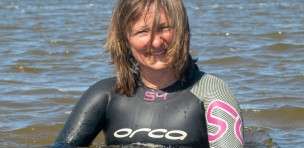
Hi and welcome to Islandeering Islandeering is for people who want adventure in Britain’s wild blue spaces – our rivers, coast, lakes, canals and islands. You will find amazing walks, paddles and swims in the UK’s most special places, those recognised for outstanding natural beauty, incredible geology or special and abundant wildlife.
More About UsWe continuously find new islands, rivers, lochs, canals and coast to walk, SUP and swim in and meet plenty of great folks along the way. Join our community to get new routes and adventures, latest blogs and news by using the email box below. Tune in also to our Facebook and Instagram pages to see where we are going next.

About Farne Islands
A true wildlife spectacle, the rugged Farne Islands are home to around forty-three thousand pairs of puffins and are one of the top grey seal pupping sites in England with more than two thousand pups born every autumn.
The fifteen to twenty islands (the exact number depends on the level of the tide) in this archipelago are scattered between two and seven kilometres from the mainland and are classified as the Inner Group and Outer Group, separated by Staple Sound. Made of sloping, resistant dolerite outcrops they characteristically have steep vertical cliffs on their south coasts that are surrounded by hardy sea stacks with gentle beaches to their north.
The earliest recorded inhabitants of the Farne Islands were religious recluses living in hermitages. St Aiden then lived here, followed by St Cuthbert, who died here after he left Lindisfarne for the solitude of these islands. Cuthbert introduced special laws in 676 protecting the eider ducks and other seabirds nesting here; these are thought to be the earliest bird-protection laws anywhere in the world.
The main islands of the Inner Group are Inner Farne, Knoxes Reef, East Wideopen and West Wideopen (all joined together on very low tides) and the more isolated Megstone. The main islands in the Outer Group are Staple Island, Brownsman, North Wamses, South Wamses, Big Harcar and Longstone. The high point of the group, measuring seventeen metres, is on Inner Farn. The sea around the islands is a popular dive spot with shipwrecks and underwater life that includes seals and diving seabirds.
How to get to Farne Islands
Boat trips from Seahouses land on Inner Farne only; there are also non-landing trips around the other Farne Islands too. Booking ahead is strongly recommended, here are the recommended boat companies for Farne Island trips:
Things to do in the Farne Islands
Farne Island boat trips land on Inner Farne and sail around Staple Island and Longstone. Here is a little bit of information on each of them, and some of our favourite highlights of the Farne Islands.
Inner Farne
Inner Farne is home to dive-bombing terns, the medieval Chapel of St Cuthbert, an early nineteenth-century lighthouse, and an information centre. The puffins are very popular on this island and are easily spotted as they waddle to and from their burrows. Arctic terns nest close to the path and dive-bomb visitors who approach them. One record-breaking Arctic tern migrated from the Farne Islands to Melbourne, Australia – a sea journey over twenty-two thousand kilometres made just three months from fledging. It remains one of the longest known distances travelled by any bird. The prominent white streak on the cliff facing the mainland is often thought to be bird droppings but it is the result of chalk deposits from the many years of spent calcium carbide from the lighthouse being thrown down the cliff. This compound was used to generate acetylene, the fuel for the light prior to electricity. The only inhabitants of the Farne Islands are the National Trust rangers who live in Pele Tower for nine months of the year and welcome visitors from the tourist boats. Inner Farne is home to puffins, shags, guillemots, Arctic terns and many other birds.
Staple Island
Staple Island offers unrivalled close-up views of the over ten thousand pairs of puffins that breed here and a more of a sense of adventure and freedom than the other islands. Puffins are usually spotted on the cliff faces of The Pinnacles, isolated rock stacks off the north-east of Staple Island. The only building is the ruins of the base of the old lighthouse.
Longstone
Longstone Lighthouse was once the home to Victorian heroine, Grace Darling, whose father was the light’s keeper. In the early hours of 7 September 1838 Darling spotted the wreck and survivors of the Forfarshire on Big Harcar, a low, rocky island nearby. Together with her father they took a rowing boat 1.5 kilometres across heavy seas to rescue four men and the lone surviving woman. A second sortie rescued four more.
She became the nation’s heroine and along with her father received a medal and a large financial reward. Her actions remain in British folklore today. Visitors to the lighthouse can view Grace’s tiny bedroom from where she first spotted the survivors clinging to the rocks. Due to avian flu always check ahead that Longstone Lighthouse is open https://www.trinityhouse.co.uk/lighthouse-visitor-centres

Things to do in Lindisfarne
Lindisfarne, also known as Holy Island, is a captivating destination rich in history, natural beauty, [...]
Feb

Lindisfarne Island walking route
Follow in the footsteps of ancient pilgrims and race the tides to soak up the [...]
Feb
